

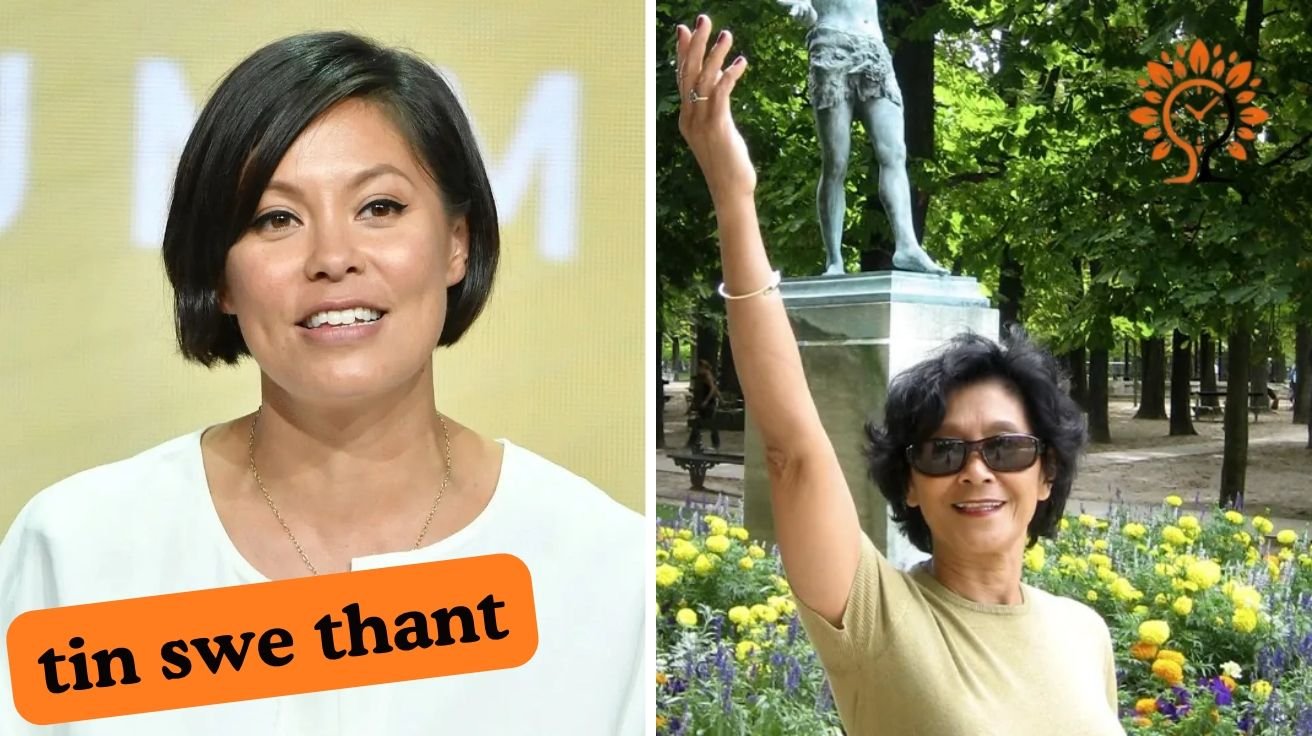
When journalist Alex Wagner published her memoir Futureface in 2018, she shared a family history shaped by migration, cultural memory, and questions of identity. At the center of that story is her mother, Tin Swe Thant, a Burmese-born immigrant whose experiences helped shape Wagner’s understanding of her heritage and place in American society.
Tin Swe Thant’s life encompasses more than her connection to a television personality. She attended Swarthmore College, worked in the American labor movement, and built a life in the United States after leaving Burma, now known as Myanmar. Her story offers a personal perspective on immigration and family history through the memories and research her daughter shared with readers.
Quick Facts
| Field | Details |
|---|---|
| Full name | Tin Swe Thant |
| Known for | Mother of journalist Alex Wagner |
| Birthplace | Rangoon, Burma, now Yangon, Myanmar |
| National background | Burmese-born |
| Immigration to the United States | 1965 |
| Citizenship | Naturalized American citizen |
| Education | Swarthmore College |
| Early professional work | Teamsters union |
| Other career connection | Alliance for Labor Action |
| Former spouse | Carl R. Wagner |
| Daughter | Alex Wagner |
| Notable family connection | Futureface (2018) |
Her Early Life and Burmese Heritage
Tin Swe Thant was born in Burma, a Southeast Asian country now commonly called Myanmar. Her daughter’s memoir describes a family background connected to Rangoon, the former English name for Yangon, and memories of life before the family established itself in the United States. These origins form the foundation of the family history Wagner later investigated.
The family’s memories of Burma included frangipani blossoms, monsoon rains, teatime, English school uniforms, and mandarin oranges at Christmas. Wagner recalled these details in her 2018 interview with NPR’s Fresh Air. They created a vivid picture of her mother’s homeland while raising questions about the political and social circumstances surrounding the family’s departure.
Her Immigration Journey to the United States
Tin Swe Thant and her mother immigrated to the United States in 1965, leaving Burma during a period of political change. The country had experienced a military coup in 1962, when General Ne Win overthrew the civilian government. Wagner’s account of her family history places their departure within this broader period of political upheaval.
The year 1965 was also significant in American immigration history. On October 3, President Lyndon B. Johnson signed the Immigration and Nationality Act of 1965, which replaced the national-origins quota system with a framework emphasizing family reunification and occupational skills. The law transformed immigration from Asia, although the family’s arrival in the same year does not establish that the legislation directly caused their move.
Her Education at Swarthmore College
After arriving in the United States and becoming a naturalized citizen, Tin Swe Thant attended Swarthmore College in Pennsylvania. Her education marked an important stage in her life beyond immigration, connecting her experience as a Burmese-born woman with American higher education. Her later professional work also shows her involvement in the country’s labor and political environment.
Alex Wagner describes her mother’s life after college in Futureface. Tin Swe Thant became interested in leftist politics and moved to Philadelphia after graduation, where she lived in a commune with a French boyfriend and helped print a socialist daily. These experiences add depth to her biography, showing that her early American years included political engagement and independent professional interests.
Her Career in the American Labor Movement
One of the revealing details in Futureface is Tin Swe Thant’s work with the Teamsters union around 1971. The Teamsters is a major American labor union representing workers in transportation and other industries. Her employment connected her with the organized labor movement during a period when unions played a significant role in debates over wages, working conditions, and political influence.
Wagner also describes her mother’s work leading to an interview with the Alliance for Labor Action, where she met Carl Wagner, the man she later married. This connection helps explain how Tin Swe Thant’s working life intersected with her family history. Rather than defining her solely through her daughter’s fame, these details show her as a woman with her own employment, political interests, and experiences.
Her Marriage to Carl Wagner
Tin Swe Thant married Carl R. Wagner, a Democratic political strategist whose career included work for prominent American politicians. Carl was born in Lansing, Iowa, in 1945 and graduated from Loras College in 1967 with a degree in political science. He later pursued postgraduate study in politics at the University of Iowa before moving into political organizing and consulting.
Carl Wagner co-chaired Bill Clinton’s successful 1992 presidential campaign and previously worked with Senator Edward M. Kennedy and other Democratic figures. His marriage to Tin Swe Thant eventually ended in divorce. The Washington Post reported that Carl died at his home in Washington, D.C., on June 23, 2017, aged 72. His political career provides context for their daughter’s upbringing, while Tin Swe Thant’s education and employment form an important part of her own story.
For more interesting topics, visit Park Times
Her Relationship With Daughter Alex Wagner

Alex Wagner was born and raised in Washington, D.C., as the only child of Tin Swe Thant and Carl Wagner. She grew up with a Burmese mother and an American father whose family roots included Ireland and Luxembourg. This combination of backgrounds became central to Alex’s later interest in ancestry, race, and what it means to belong to a country.
One formative incident occurred when Alex was 12 years old. While she was at a diner with her father, a line cook asked whether she was adopted. Wagner later explained that the question made her realize other people did not necessarily see her as simply American. As an adult, she began asking how much of her family’s history she understood and what had been left unexplored.
How Tin Swe Thant’s Story Influenced Futureface
Published in 2018, Alex Wagner’s memoir, Futureface: A Family Mystery, an Epic Quest, and the Secret to Belonging, examines her attempts to understand her ancestry. The book follows her research into both her Burmese maternal heritage and her father’s European family background. Tin Swe Thant’s memories and migration history form an important part of that investigation.
Wagner compared family stories with historical records, visited Burma and Luxembourg, and examined the possibilities and limitations of DNA ancestry testing. Her research revealed that family memories can preserve emotional truths while simplifying difficult historical realities. On her mother’s side, she confronted the legacy of Burmese nationalism and anti-Indian prejudice, complicating the romantic stories she had heard about the family’s former life.
Burma’s Political History and the Family’s Memories
Understanding Tin Swe Thant’s background requires looking beyond personal recollections to Burma’s modern history. The 1962 military coup brought an end to parliamentary democracy under Ne Win, and his government pursued a political and economic path that reshaped the country. This history provides relevant context for a family that left Burma in 1965, although individual migration decisions cannot be reduced to one national event.
Wagner’s research also examined colonial-era Burma and tensions between the majority Bamar population and Indian communities. In her Fresh Air interview, she discussed how stories passed down through her family contained attitudes reflecting wider historical prejudice. This discovery gave her memoir a more complicated perspective: exploring one’s roots can reveal cherished traditions as well as injustices that earlier generations may have overlooked.
Family Heritage and Generational Identity
Tin Swe Thant’s life connects two generations with different relationships to cultural identity. For her, Burma was a lived homeland left behind during a period of political change. For Alex, it was initially a place known through family stories, traditions, and fragments of memory. As an adult, Alex wanted to understand the historical experiences behind those recollections.
That difference became a central theme in Futureface. Wagner’s search involved more than finding names or tracing ancestry through documents; she questioned whether heritage could provide the clear sense of belonging she once expected. Her mother’s experiences gave that question a personal foundation, while the research encouraged her to consider how national identity, family memory, and historical responsibility intersect.
Tin Swe Thant’s Family Life and Personal Influence
Tin Swe Thant’s family life is most clearly documented through her relationship with Alex Wagner and her former marriage to Carl Wagner. Her daughter has discussed the influence of family stories on her understanding of identity, while Futureface provides details about Tin Swe Thant’s early years in America, education, and work. These accounts offer a picture of her life beyond her connection to a prominent journalist.
Alex grew up in Washington, D.C., but later traveled internationally to investigate her family’s past. The process led her to reconsider inherited narratives and confront historical complexities. Tin Swe Thant’s experiences became part of that investigation, helping connect family memories with wider questions about culture, immigration, and belonging.
Public Profile and Media Presence
Tin Swe Thant has lived largely outside the public spotlight, while her daughter has built a career in journalism and television. The most substantial accounts of Tin Swe Thant’s background appear through Alex Wagner’s memoir and interviews, which discuss her mother’s migration, college education, employment, and memories of Burma.
For readers interested in Tin Swe Thant, these family accounts offer more useful biographical information than celebrity speculation. They document her journey to the United States, her work in the labor movement, and her influence on a memoir about ancestry and identity. Her story is best understood through these documented experiences rather than assumptions about her private life.
Five Interesting Facts About Tin Swe Thant
- Burmese heritage: Tin Swe Thant was born in Burma, now known as Myanmar.
- Immigration in 1965: She and her mother moved to the United States during a period of political change in Burma.
- College education: She attended Swarthmore College in Pennsylvania.
- Labor movement career: She worked with the Teamsters union around 1971.
- Connection to Futureface: Her family history and Burmese heritage feature in Alex Wagner’s 2018 memoir.
Conclusion
Tin Swe Thant’s biography brings together immigration, education, work, and cultural heritage. Born in Burma, she moved to the United States in 1965, attended Swarthmore College, and worked in the labor movement before building a family with political strategist Carl Wagner. These details offer a fuller portrait than a biography focused only on her daughter’s fame.
Her influence is especially visible in Alex Wagner’s Futureface, which turns family memories into a wider investigation of ancestry, prejudice, and belonging. Through that work, Tin Swe Thant’s story becomes part of a larger conversation about how people carry their past into a new country and how later generations make sense of the histories they inherit.
FAQs
Who is Tin Swe Thant?
Tin Swe Thant is a Burmese-born immigrant best known as the mother of journalist Alex Wagner. Her education and labor-movement career feature in Futureface.
Where was Tin Swe Thant born?
Tin Swe Thant was born in Burma, now Myanmar. Her family’s memories of Rangoon and migration to America form part of Alex Wagner’s memoir.
What did Tin Swe Thant do for work?
Tin Swe Thant worked with the Teamsters union around 1971 and later became connected to the Alliance for Labor Action, where she met Carl Wagner.
Who was Tin Swe Thant’s husband?
She was married to Carl R. Wagner, a Democratic political strategist who co-chaired Bill Clinton’s 1992 presidential campaign. They later divorced.
Why is Tin Swe Thant connected to Futureface?
Her migration and Burmese heritage are central to Alex Wagner’s 2018 memoir, which investigates family stories, ancestry, and the meaning of belonging.
Read More: Meet Drew Sangster & Learn About Her Life With Romeo Miller
