

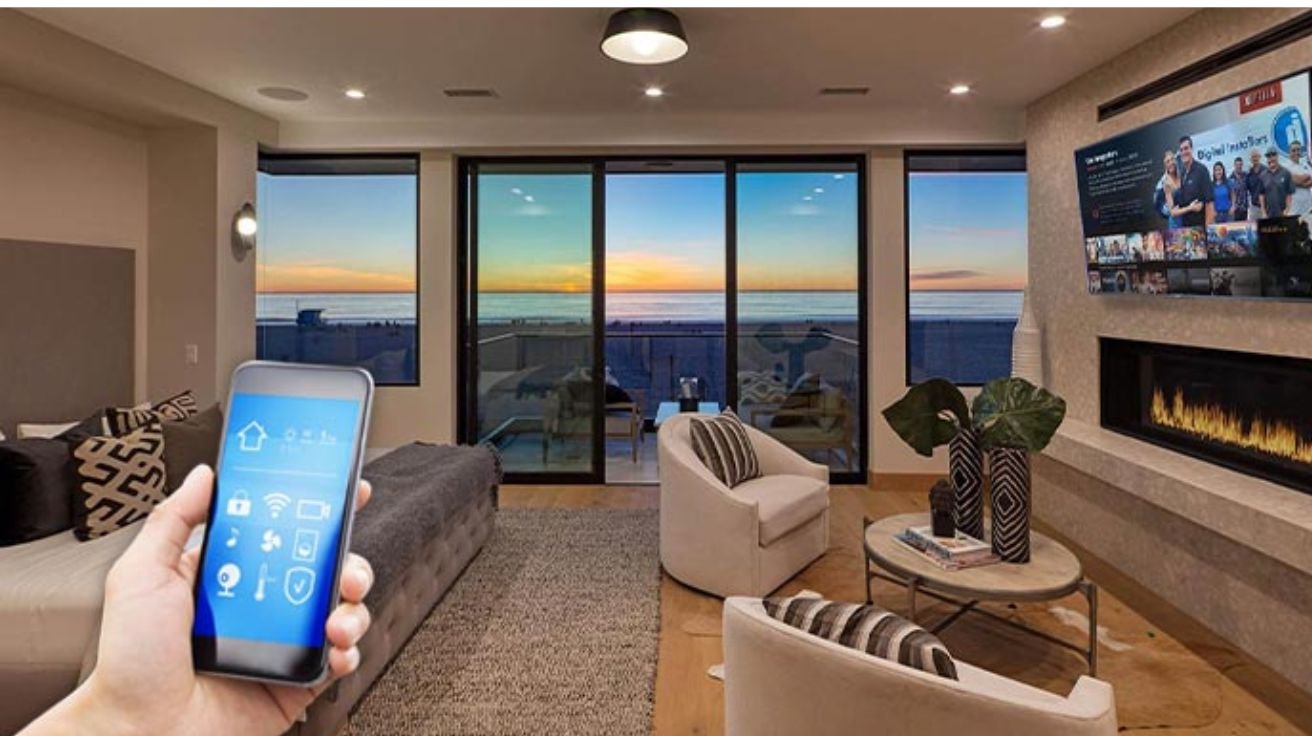
Smart voice assistants have changed the way people interact with technology at home. What once required reaching for a switch, remote control, or smartphone can now often be managed with a simple spoken command. As connected-home technology becomes more accessible, voice control is becoming an increasingly useful part of everyday household routines.
For homeowners considering a connected property, Home Automation Services can bring together voice assistants, lighting, entertainment, climate control, security, and other smart technologies into a more coordinated system. The goal is not simply to add more devices, but to make the home easier and more intuitive to manage.
Making Everyday Tasks More Convenient
One of the biggest advantages of voice assistants is convenience. Simple tasks that are repeated throughout the day can be controlled without physically interacting with a device.
A homeowner might ask the system to turn off the downstairs lights before going to bed, adjust the temperature while relaxing on the sofa, or start music during dinner. These small interactions may seem insignificant individually, but they can make daily routines feel much smoother.
Voice control can be especially helpful when someone’s hands are occupied. For example, a person preparing food in the kitchen can adjust lighting or control music without touching a switch or phone.
Voice-Controlled Smart Lighting
Lighting is one of the most natural applications for voice assistants. Instead of manually switching individual lights, homeowners can use spoken commands to control lighting throughout different areas of the property.
Smart lighting can also be organised into groups or scenes. A single command could activate several lights in a living area, dim selected fixtures, or switch off lighting throughout the house.
This provides more flexibility than traditional lighting controls. Rather than having to manage every fixture separately, homeowners can create lighting routines around specific activities such as watching television, entertaining guests, reading, or preparing for sleep.
When integrated properly, Home Automation Services can help connect voice control with a broader lighting strategy, making the system easier to operate while maintaining a clean and organised interior.
Managing Temperature With Voice Commands
Smart thermostats and climate-control systems can also benefit from voice interaction. Homeowners can adjust temperature settings without walking to a thermostat or opening an app.
For example, someone arriving home may be able to request a more comfortable temperature before settling in. Similarly, temperature settings can be changed from another room without interrupting what they are doing.
Voice control can become even more useful when combined with schedules, occupancy sensors, and other automation features. Instead of relying entirely on manual adjustments, the home’s climate system can respond to established routines.
Creating a More Connected Entertainment Experience
Home entertainment is another area where voice assistants can simplify everyday interactions. Music, televisions, streaming devices, and other compatible equipment can potentially be managed through voice commands.
Instead of searching for multiple remotes, users can interact with compatible systems using natural instructions. This can be particularly useful in rooms with several connected entertainment devices.
Voice commands can also complement dedicated control interfaces. Homeowners may still use touchscreens, remotes, or smartphones when they want detailed control, while voice commands provide a quick option for common actions.
Supporting Home Security
Voice technology can also interact with connected security systems. Depending on the equipment and configuration, homeowners may be able to check or control certain security-related functions through compatible voice commands.
For example, voice control may provide a convenient way to manage smart locks, security lighting, or connected cameras. However, security-related automation should always be designed with privacy and access control in mind.
Not every function should necessarily be controlled through voice alone. Sensitive features may require additional authentication or confirmation to reduce the risk of unintended commands.
Helping Create Useful Daily Routines
The real value of voice assistants becomes clearer when they are combined with automation routines. Instead of treating every smart device as a separate product, homeowners can create coordinated actions based on their daily habits.
A morning routine could gradually activate selected lights, provide information, and adjust the home’s climate. An evening routine might dim the lights, reduce entertainment volume, and prepare selected areas for bedtime.
These routines reduce the number of individual actions required from the homeowner. The technology works quietly in the background while still allowing manual control when needed.
Making Smart Homes Easier for Different Users
A voice-controlled system can also make certain smart-home functions easier to access for people who may find traditional interfaces inconvenient. Speaking a command can sometimes be simpler than navigating through several smartphone menus.
This can be particularly useful when multiple members of a household use the same system. Instead of requiring everyone to learn a complicated control interface, basic functions can be accessed through familiar language.
Good system design remains important, though. Voice commands should complement intuitive switches and controls rather than completely replacing them.
Planning for Privacy and Reliability
As homes become more connected, privacy and reliability need to remain important considerations. Voice assistants may process spoken commands through connected services, so homeowners should understand how devices handle recordings, data, permissions, and account access.
Network reliability is another important factor. Many connected devices depend on a stable home network to communicate with each other and external services.
This is why professional planning can be valuable. Home Automation Services can help homeowners consider connectivity, device compatibility, control options, and future expansion before installing multiple smart products.
The Future of Voice-Controlled Homes
Voice assistants are becoming less about individual commands and more about natural interaction with an entire connected environment. As smart-home systems continue to develop, voice control is likely to become increasingly integrated with lighting, climate, entertainment, security, and other household functions.
The most effective smart homes will not necessarily be the ones with the greatest number of devices. Instead, they will be homes where technology works together logically and responds to the way people actually live.
With well-planned Home Automation Services, voice assistants can become a practical part of that experience. They can reduce everyday friction, simplify repetitive tasks, and give homeowners a more convenient way to interact with their surroundings.
Smart voice control ultimately works best when it supports the people living in the home rather than demanding their attention. When thoughtfully integrated, it can turn a collection of connected devices into a more responsive, comfortable, and manageable living environment.
For more interesting topics, visit Park Times
