

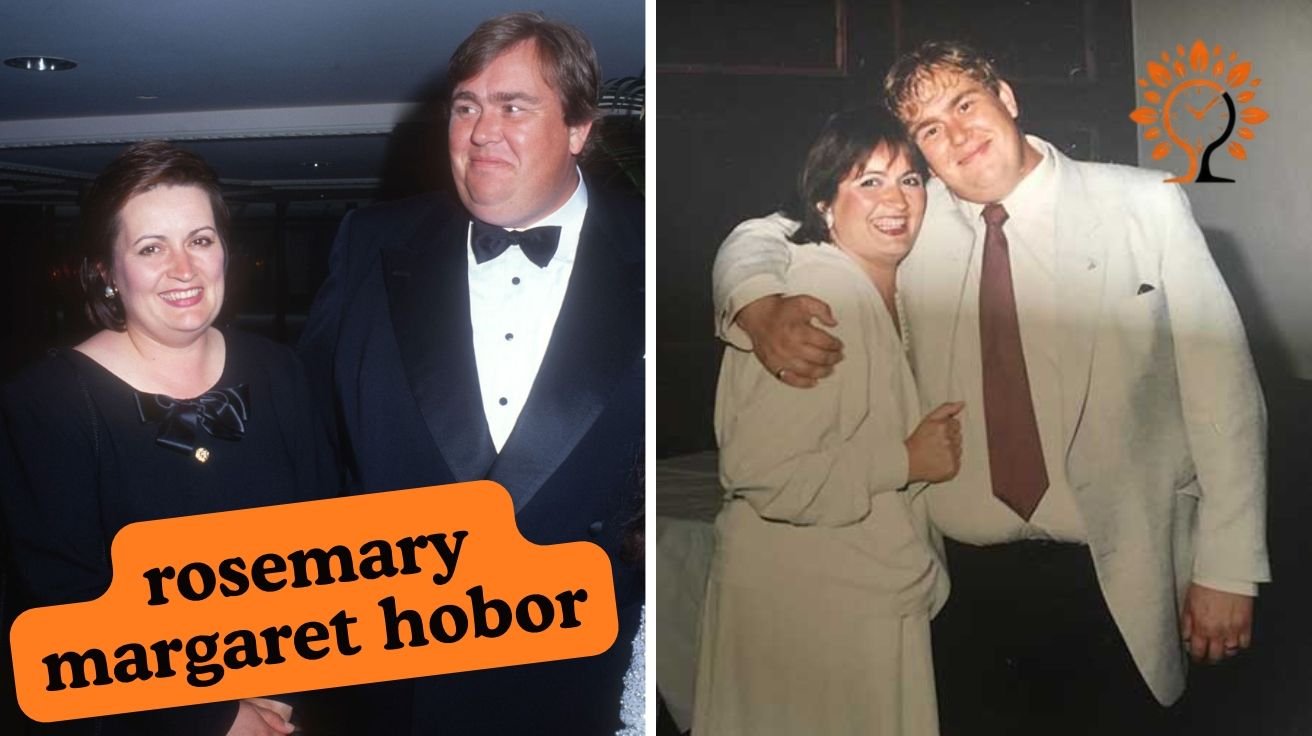
Millions of people remember John Candy for his performances in Planes, Trains and Automobiles, Uncle Buck, and Home Alone. Behind the celebrated comedian was Rosemary Margaret Hobor, his wife, lifelong companion, and an accomplished Canadian artist. Although her connection to the actor introduced her to a wider audience, Rosemary developed a professional identity through painting, ceramics, photography, and sculpture long before the public became interested in her personal story.
Known professionally as Rose Candy, Rosemary has spent decades exploring different forms of visual art. She studied at the Ontario College of Art & Design in Toronto, participated in exhibitions, received Ontario Arts Council Visiting Artist Grants, and established studios in California. Interest in her life grew again following the release of John Candy: I Like Me in 2025, a documentary directed by Colin Hanks and produced by Ryan Reynolds. Rosemary participated as a co-executive producer, helping bring her family’s memories of John to the screen.
Quick Facts
| Field | Details |
|---|---|
| Full Name | Rosemary Margaret Hobor Candy |
| Professional Name | Rose Candy |
| Profession | Contemporary Artist |
| Nationality | Canadian |
| Hometown | Toronto, Ontario, Canada |
| Current Home | Brentwood, Los Angeles, California |
| Education | Ontario College of Art & Design |
| Further Education | Brentwood Art Centre |
| Artistic Specialties | Ceramics, Painting, Sculpture, Photography |
| Husband | John Candy (1979–1994) |
| Children | Jennifer Candy and Christopher Candy |
| @helllorose | |
| Rosemary Candy | |
| Official Website | RoseCandyArtist.com |
Early Life and the Artistic Influences That Shaped Her
Rosemary Margaret Hobor Candy developed her appreciation for art while growing up in Toronto, Ontario, Canada. Her official artist biography offers an unusually personal account of the places and experiences that influenced her. Among her earliest artistic memories were visits to the Jackson Pollock Gallery near Bathurst Street, where contemporary paintings introduced her to different approaches to visual expression.
Another important experience came from visiting the Art Gallery of Ontario, where she saw works by the Group of Seven, the Canadian landscape artists whose paintings left a lasting impression on her. She also recalls visiting the Royal Ontario Museum and the Gardiner Museum, particularly appreciating the latter’s historical porcelain collection. These experiences helped shape her interest in painting, ceramics, organic forms, and the relationship between art and everyday life.
Education at Ontario College of Art & Design
Rosemary attended the Ontario College of Art & Design (OCADU) in Toronto from 1970 to 1973. Her studies covered a broad range of practical disciplines rather than focusing exclusively on painting. She explored ceramics, handbuilding, wheel throwing, glaze chemistry, sculpture, metalwork, weaving, woodworking, interior design, photography, and life drawing.
Her education also introduced her to specialized processes, including bronze sculpture through lost-wax techniques and aluminum casting. At the Brentwood Art Centre in Los Angeles, she continued studying painting, drawing, printmaking, photography, and sculpture. Her biography credits several instructors, including David Schoffman, Ada Paulin, David Lloyd, Barbara Ashton, Ellen King, and David Limrite. This varied education provided the technical foundation for her later work in both two-dimensional and three-dimensional art.
Rosemary Margaret Hobor’s Artistic Career and Professional Achievements
Rosemary began presenting her work through exhibitions and ceramic commissions during the early 1970s. Her educational career at OCADU was followed by appearances at Toronto City Hall between 1972 and 1973, the Canadian Guild of Crafts exhibition, Timothy Eaton Company’s Artist Showcase, and ceramic exhibitions at the Potters Studio Co-op on Dupont Street. Her graduation-year exhibition also featured organic forms, reflecting an interest that continued throughout her career.
Between 1974 and 1979, she received Ontario Arts Council Visiting Artist Grants for work with the North York School Board. During this period, she also completed several commissions, including large ceramic planters for the Second City Firehall Theatre in Toronto and twelve serving containers for the Flying Circus Restaurant in Yorkville. Another commission involved twelve planters for a greenhouse loft in Chicago. These projects demonstrate that her early career included commercial commissions, educational workshops, and gallery exhibitions.
Her Work in Ceramics, Painting and Photography
Ceramics has remained one of Rosemary’s strongest artistic interests. Her training included handbuilding, wheel throwing, glaze chemistry, and experimentation with different clay bodies. She later spent time working at The Clay House in Santa Monica, where she continued developing her wheel-throwing techniques and explored Kenji clay. Her work has included functional objects such as bowls, vases, planters, and coffee cups.
Painting became another major part of her professional practice. Her portfolio includes abstract acrylic paintings, oil paintings, organic forms, and compositions inspired by landscapes and natural surroundings. Photography and drawing also feature on her artist website. Her education included black-and-white film photography and Pentax camera work, while her later portfolio presents photography as an independent creative discipline rather than simply a supporting activity.
Teaching, Workshops and Artistic Commissions
Rosemary’s career has included sharing her technical knowledge with students and other aspiring artists. During the 1970s, her Ontario Arts Council grants supported visiting artist activities in the North York School Board. She later developed a children’s clay workshop programme in Los Angeles and conducted educational sessions introducing younger students to handbuilding and ceramic painting.
Her Los Angeles teaching activities included an 1988 inner-city visiting artist workshop for children in grades four and five, followed by a ceramic painting workshop in 1989 for students in grades five and six. Her commercial commissions also continued over the years. She created six coffee cups for RHD sales and decorative ginger-coloured ceramic vases for Lululemon store reception areas. Later commissions included porcelain bowls and coffee cups, demonstrating her continued interest in combining artistic design with functional objects.
For more interesting topics, visit Park Times
How Rosemary Margaret Hobor Met John Candy
Rosemary met John Candy through a blind date in Toronto before he became an internationally recognized comedy star. Their first meeting eventually became one of the more entertaining stories associated with their relationship. John later described the encounter humorously, recalling that he thought Rosemary did not initially like him and joking about his determination to change her mind.
During a 2026 interview with the Los Angeles Times, Rosemary shared her reaction to seeing that archived television interview in the documentary John Candy: I Like Me. She explained that she had never watched the footage before the documentary brought it to her attention. Recalling their developing relationship, she said, “As soon as I started to get to know him, I was head over heels for him.” Her recollection offers a personal glimpse into a relationship that began long before Hollywood fame became part of their everyday lives.
Marriage to John Candy and Their Life Together
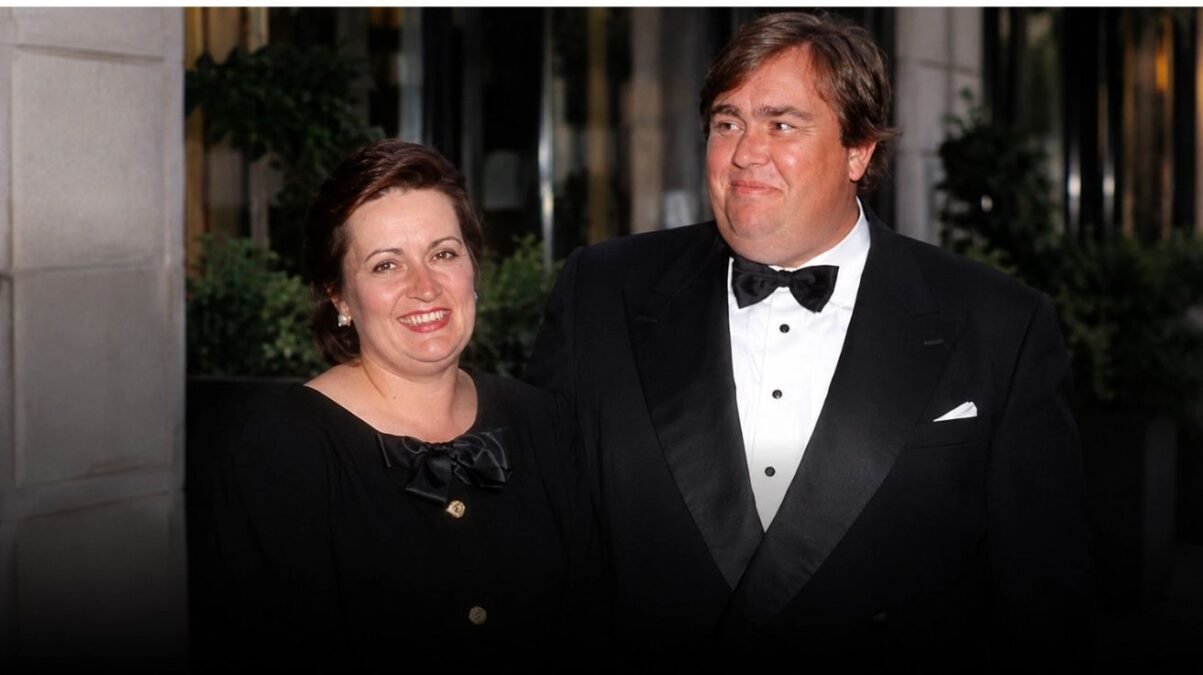
Rosemary and John married in 1979 in Los Angeles, beginning a marriage that continued until his death in March 1994. Their wedding took place while John was working on 1941, directed by Steven Spielberg. The timing coincided with a period when his career was expanding beyond Canadian television and comedy into major Hollywood productions.
One unusual story associated with their wedding concerns the McDonald’s golden arches visible in photographs from the celebration. The images led to the mistaken impression that the couple had married inside a restaurant. The reception actually took place on a soundstage previously used for a McDonald’s Canada commercial. Their relationship continued through John’s busy acting years, with Rosemary maintaining her own interests in art and family life.
Rosemary and John Candy’s Two Children
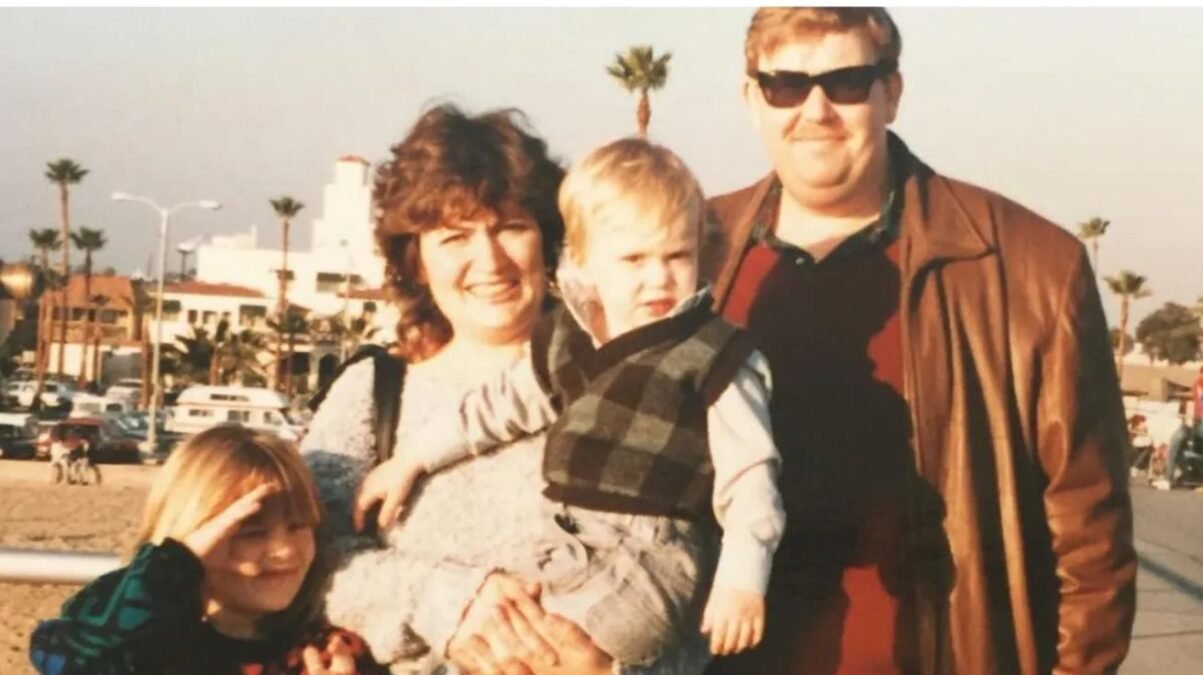
Rosemary and John raised two children, Jennifer Candy and Christopher Candy. Jennifer later became an actor and producer, while Christopher developed interests in acting, music, and entertainment. Both children have remained closely involved in preserving their father’s legacy, particularly through interviews, family archives, and documentary projects.
The Candy family has described itself as close-knit, with decisions about discussing John’s life made collectively. In the 2026 Los Angeles Times interview, Christopher and Jennifer explained that the family initially declined several opportunities to make a documentary about their father. They wanted to tell his story on their own terms, rather than allow an unauthorized production to determine how the public remembered him.
Life After John Candy’s Death
John Candy died on March 4, 1994, at the age of 43, after suffering a heart attack while filming Wagons East in Mexico. His death brought an abrupt end to their marriage and left Rosemary raising their two children. The actor’s passing also prompted an enormous response from fans, fellow performers, and the entertainment industry.
Rosemary continued her work in California while maintaining her family’s connection to John’s memory. The family home in Brentwood contains photographs, books, and memorabilia associated with the actor. In her August 2026 interview with the Los Angeles Times, Rosemary and her children discussed how personal memories remain part of their everyday lives. Her approach to preserving his legacy has centred on family stories and personal experiences rather than simply celebrating his filmography.
Rosemary’s Role in John Candy: I Like Me
The documentary John Candy: I Like Me became an important project for Rosemary and her children. Directed by Colin Hanks and produced by Ryan Reynolds, the film premiered as the opening-night feature at the Toronto International Film Festival on September 4, 2025. It subsequently became available on Prime Video on October 10, 2025.
Rosemary served as a co-executive producer, alongside Jennifer Candy-Sullivan and Christopher Candy. The project grew out of an idea Ryan Reynolds proposed in 2019, initially involving a short social media tribute to John. Following the positive response, the family agreed to develop a larger documentary. It combines archival interviews, home movies, family photographs, film clips, and conversations with people who knew John. The family’s decision to participate allowed Rosemary and her children to present a more personal account of the comedian’s life, including his struggles and achievements.
Rosemary Margaret Hobor’s Artistic Life Today
Rosemary continues to develop her artistic practice through painting and ceramics. Her official website documents projects from 2024 through 2026, including porcelain bowls, coffee cups, vases, acrylic paintings, and oil paintings. In February 2025, she described working on porcelain bowls and a series of white circular acrylic paintings. She also documented completing a magnolia painting in June of that year.
Her professional updates from 2026 provide further insight into her current studio practice. She has described introducing a new clay body, developing ceramic vases, and researching black underglazes and overglazes for porcelain bowls. Her Santa Monica Studio/Gallery, which hosted exhibitions and private sales for several years, closed in 2024. However, she has continued producing artwork and maintaining her online portfolio and sales presence.
Rosemary Margaret Hobor’s Social Media Presence
Rosemary uses her professional website, RoseCandyArtist.com, to showcase her creative work. Visitors can explore separate collections of ceramics, paintings, photography, and drawings, along with information about her education and exhibition history. The website also provides access to her store and contact information for people interested in her artwork.
Rosemary maintains an online presence through her official artist website, Instagram account (@helllorose), and Facebook page under the name Rosemary Candy. These platforms allow her to share updates about her creative projects, showcase her artwork, and connect with people interested in her work. Her online presence mainly reflects her identity as a contemporary artist, highlighting her paintings, ceramics, and other creative projects.
Interesting Facts About Rosemary Margaret Hobor
- Her earliest artistic inspiration came from Toronto galleries: She specifically remembers the Jackson Pollock Gallery and the Art Gallery of Ontario as formative experiences.
- She studied an unusually wide range of creative disciplines: Her OCADU education included weaving, metalwork, woodworking, plastics, ceramics, and photography.
- She completed a commission for Chicago: Her early professional work included twelve planters commissioned for a greenhouse loft.
- Her artwork has appeared in family exhibitions: A 2015 group exhibition brought together Rosemary’s art, Jennifer’s creative work, and music by Christopher.
- Her artistic career has continued beyond her gallery: After closing her Santa Monica Studio/Gallery in 2024, she continued developing new porcelain pieces, paintings, and glaze combinations.
Conclusion
Rosemary Margaret Hobor’s story combines an independent artistic career with a lasting family connection to one of Canada’s most beloved entertainers. From her early gallery visits in Toronto and education at OCADU to her ceramic commissions, teaching workshops, and exhibitions in California, she has developed a creative practice spanning several decades.
Her marriage to John Candy and her contribution to John Candy: I Like Me remain important parts of her personal history. Yet her own artwork deserves equal attention. Through ceramics, painting, photography, and continued studio experimentation, Rosemary Candy has maintained an artistic identity that extends well beyond her connection to Hollywood.
FAQs
1. Who is Rosemary Margaret Hobor?
Rosemary Margaret Hobor, professionally known as Rose Candy, is a Canadian contemporary artist and the widow of comedian John Candy.
2. When did Rosemary Margaret Hobor marry John Candy?
Rosemary married John Candy in 1979 in Los Angeles. Their marriage lasted until his death in March 1994.
3. How many children does Rosemary Margaret Hobor have?
She has two children, Jennifer Candy and Christopher Candy, who have both participated in projects celebrating their father’s legacy.
4. What is Rosemary Margaret Hobor’s profession?
She is a contemporary artist specializing in ceramics, painting, sculpture, drawing, and photography.
5. What is Rosemary Margaret Hobor doing today?
She continues creating porcelain ceramics, paintings, and other artwork, sharing her professional projects through her artist website.
Read More: Who Is Genevieve Gallen? The Story of Verne Troyer’s Ex-Wife
