

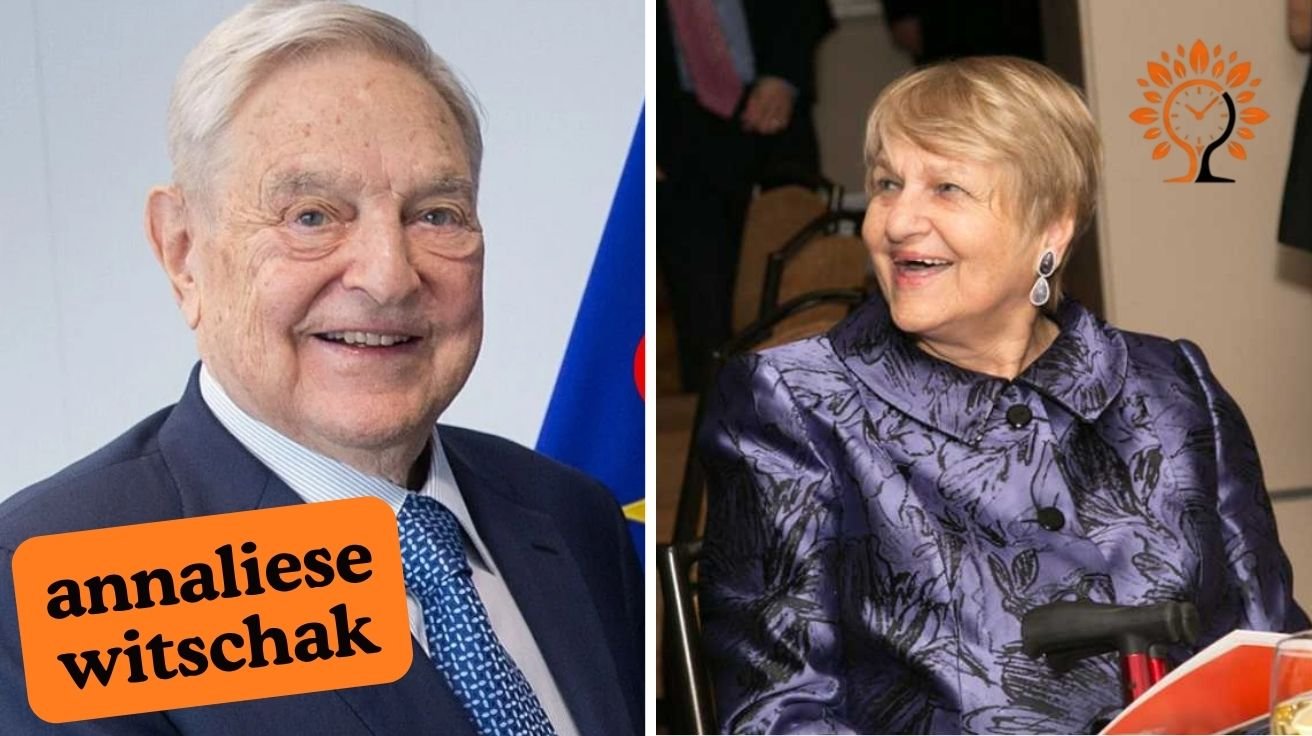
Annaliese Witschak (1934–2025) lived a life shaped by childhood loss, family, literature, and a lasting commitment to classical music. Although many people recognise her as the first wife of billionaire investor George Soros, her own story extends beyond that relationship. She became an author, hosted gatherings for artists and friends, and supported young musicians for more than four decades.
Born in Verden an der Aller, Germany, Annaliese moved to New York City in 1955. She married Soros in 1960, raised three children with him, and continued developing her interests in music and culture after their separation. Her later years included regular trips to Germany, involvement with arts organisations, and the publication of a book inspired by her experiences as a hostess.
Quick Facts
| Field | Details |
|---|---|
| Full name | Annaliese Witschak Soros |
| Date of birth | January 3, 1934 |
| Birthplace | Verden an der Aller, Germany |
| Date of death | September 5, 2025 |
| Age at death | 91 |
| National background | German-born; later lived in the United States |
| Profession | Author and classical music patron |
| Former spouse | George Soros |
| Marriage date | September 17, 1960 |
| Separation | 1977 |
| Divorce | 1983 |
| Children | Robert, Andrea, and Jonathan Soros |
| Notable book | Dinner Party Disasters: True Stories of Culinary Catastrophe |
| Arts involvement | Young Concert Artists and Pianofest in the Hamptons |
Early Life and Family Background
Annaliese Witschak was born on January 3, 1934, in Verden an der Aller, a town in northern Germany. Her father, Walter Witschak, died in 1937, and her mother, Elisabeth, subsequently moved the family to Neuenkirchen bei Soltau. Elisabeth supported her children through bookkeeping, occasional jobs, and writing articles and poems for a local newspaper.
Annaliese’s childhood involved considerable responsibility, including farm and household chores. She enjoyed school, where a music teacher encouraged her interest in singing, piano, and opera. Her mother and only brother, Hans, died within six months of each other when Annaliese was 16, leaving her orphaned during a difficult period in postwar Germany. These early experiences became a significant part of her life story.
Moving to New York and Starting a New Life
In 1955, Witschak moved from Germany to New York City. The move represented a major transition from her European upbringing to a new life in the United States. Like many immigrants rebuilding their lives after the Second World War, she had to establish herself in unfamiliar surroundings while developing new personal and professional connections.
Her early work in New York included positions as a secretary and keypunch operator. These jobs formed part of her life before she became associated with Soros’s growing financial career. She also maintained a strong interest in music and cultural activities, interests that would become increasingly important in her later life and eventually lead to decades of involvement with classical music organisations.
Meeting George Soros and Their Marriage
Annaliese met George Soros in New York in the late 1950s, and the relationship developed into marriage on September 17, 1960. Soros had been born in Budapest, Hungary, in 1930 and moved to the United States in 1956 after studying at the London School of Economics. Their shared European backgrounds connected two people who had experienced major changes in their lives before settling in America.
Their marriage began before Soros became internationally famous for his investment strategies and philanthropy. During their years together, they built a family and established a home in New York. Their relationship lasted through an important period in Soros’s professional development, but Witschak’s interests also grew beyond her role as a spouse. Music, friendships, entertaining, and family life remained central parts of her personal world.
Family Life and Their Three Children
Witschak and Soros had three children: Robert Daniel Soros, Andrea Soros Colombel, and Jonathan Tivadar Soros. Their family grew during the 1960s and early 1970s, while Soros was developing his career in investment management. Witschak devoted considerable attention to family life, and her later obituary remembered her as a devoted mother and grandmother whose affection extended across generations.
The children followed different professional paths as adults. Robert became associated with investment management, Andrea developed a career in philanthropy, and Jonathan pursued finance and political advocacy. Their individual interests reflect the range of activities represented within the wider Soros family. Witschak’s own legacy, however, also includes her friendships, cultural interests, writing, and long-standing support for young musicians.
For more interesting topics, visit Park Times
Separation and Divorce From George Soros
Witschak and Soros separated in 1977 after more than 16 years of marriage. Their formal divorce followed in June 1983, ending a relationship that had lasted more than two decades from the wedding date. The distinction between their separation and the final divorce is important when presenting an accurate timeline of their personal lives.
Following the separation, Witschak developed an independent life centred on family, friends, travel, and the arts. She did not become a regular public commentator on her former husband’s career. Instead, her later biography is best understood through the activities she pursued in her own right, especially her involvement with classical music organisations and her interest in bringing people together through entertaining and hospitality.
Writing Career and Dinner Party Disasters
Witschak’s interest in hosting and social gatherings inspired her book Dinner Party Disasters: True Stories of Culinary Catastrophe, published in 2007. She co-wrote the 96-page illustrated book with Abigail Stokes, with illustrations by Roderick Mills. Published by Harry N. Abrams, it brought together stories of dinner parties that went wrong and offered practical suggestions for handling entertaining mishaps.
The book combines humour with the challenges of hosting guests, planning menus, and managing unexpected problems. Its format includes descriptions of the hosts, guests, and meals, followed by accounts of what went wrong and suggestions for avoiding similar situations. The publication provides a glimpse of Witschak’s social interests and her willingness to turn entertaining experiences into an accessible book for readers.
Her Later Years, Travel and Personal Interests
Witschak maintained strong connections with Germany throughout her later life. She returned regularly to the country despite the painful experiences of her childhood, and she rented an apartment in Berlin for extended stays during the performance season. The city’s opera houses and concert halls gave her opportunities to continue enjoying classical music in the country where her interest in music had first developed.
Her interests also included travel, friendship, and spending time with her family. She was known for welcoming people into her home and building enduring relationships with those around her. Witschak celebrated her ninetieth birthday in Berlin in 2024, marking a return to a place connected with her cultural roots. She died on September 5, 2025, at the age of 91, leaving behind three children and nine grandchildren, along with a wide circle of friends.
Her Contribution to Classical Music and Young Artists
Classical music was one of the most enduring interests in Witschak’s life. In 1981, she helped launch the Southampton Performing Arts festival, which brought a classical concert series to Southampton, New York. Her involvement reflected a commitment to making live performances part of the cultural life of the community where she spent summers for decades.
In the early 1990s, Witschak joined the board of Pianofest in the Hamptons, a summer master-class residency programme for pianists, and remained involved until her death. She also served on the board of Young Concert Artists for more than 40 years. She welcomed musicians into her apartment so they could practise before performances in New York, taking an interest in their personal lives as well as their professional development. Young Concert Artists later established the Annaliese Soros Educational Residency Program in recognition of her support.
Financial Background and Public Profile
Because Witschak was married to George Soros during the early years of his financial career, readers often search for information about her wealth. Soros built his fortune through investment management and later became a major philanthropist. However, his personal fortune cannot be treated as Witschak’s individual net worth, and a responsible biography should distinguish between the two.
Witschak’s documented achievements include her book, her decades of arts patronage, and her support for young performers. These contributions provide a more meaningful account of her independent life than a speculative financial estimate. Her personal financial arrangements and the terms of the divorce should not be presented as facts without reliable documentation. Her public legacy is more clearly reflected in her cultural contributions and the institutions she supported.
Interesting Facts About Annaliese Witschak
- Born in northern Germany: Witschak was born in Verden an der Aller on January 3, 1934.
- Moved to New York in 1955: Her early work in the United States included jobs as a secretary and keypunch operator.
- Developed an early love of music: A school music teacher encouraged her interest in singing, piano, and opera.
- Published a book in 2007: She co-authored Dinner Party Disasters: True Stories of Culinary Catastrophe with Abigail Stokes.
- Supported young performers for decades: Her involvement with Young Concert Artists lasted more than 40 years, and she also supported Pianofest in the Hamptons.
Conclusion
Annaliese Witschak’s biography encompasses far more than her marriage to George Soros. Her early life in Germany, move to New York, experience of family loss, and years raising three children formed important parts of her story. In later life, she became an author and a dedicated supporter of classical music, helping young performers develop their talents and welcoming musicians into her home.
Witschak died in September 2025 at the age of 91. Her contributions to Young Concert Artists, Pianofest in the Hamptons, and the Southampton Performing Arts festival reflect a sustained commitment to culture and community. Remembering her as a mother, grandmother, writer, friend, and music patron offers a fuller understanding of a woman whose own achievements deserve attention alongside her connection to a famous financial family.
FAQs
Who was Annaliese Witschak?
Annaliese Witschak was a German-born author and classical music patron, best known as George Soros’s first wife. She died on September 5, 2025, aged 91.
When was Annaliese Witschak born?
She was born on January 3, 1934, in Verden an der Aller, northern Germany. She later moved to New York in 1955.
How many children did Annaliese Witschak have?
She had three children with George Soros: Robert Daniel Soros, Andrea Soros Colombel, and Jonathan Tivadar Soros.
What book did Annaliese Witschak write?
She co-authored Dinner Party Disasters: True Stories of Culinary Catastrophe, published by Harry N. Abrams in 2007 with Abigail Stokes.
What was Annaliese Witschak’s contribution to music?
She supported Young Concert Artists for more than 40 years, served on the Pianofest in the Hamptons board, and helped launch Southampton’s classical music festival.
Read More: Michelle Ghent: Exploring Her Connection to Terrence Howard
